



Most homeowners think about waterproofing when the water arrives: after a storm, during the thaw, or the morning they find the carpet wet. Yet the best time to fix a basement is usually when nothing is wrong. For many jobs, and especially the ones that involve digging, that time is summer.
This guide explains why summer works so well for waterproofing, what it doesn’t help with, which jobs suit other seasons, and how far ahead to book.
The short answer: summer is a very good season for exterior work, because the ground is dry and easy to dig. Interior work suits any season. So the real advice is to book ahead, whatever the month.
Why summer works well
The ground is dry and easy to dig
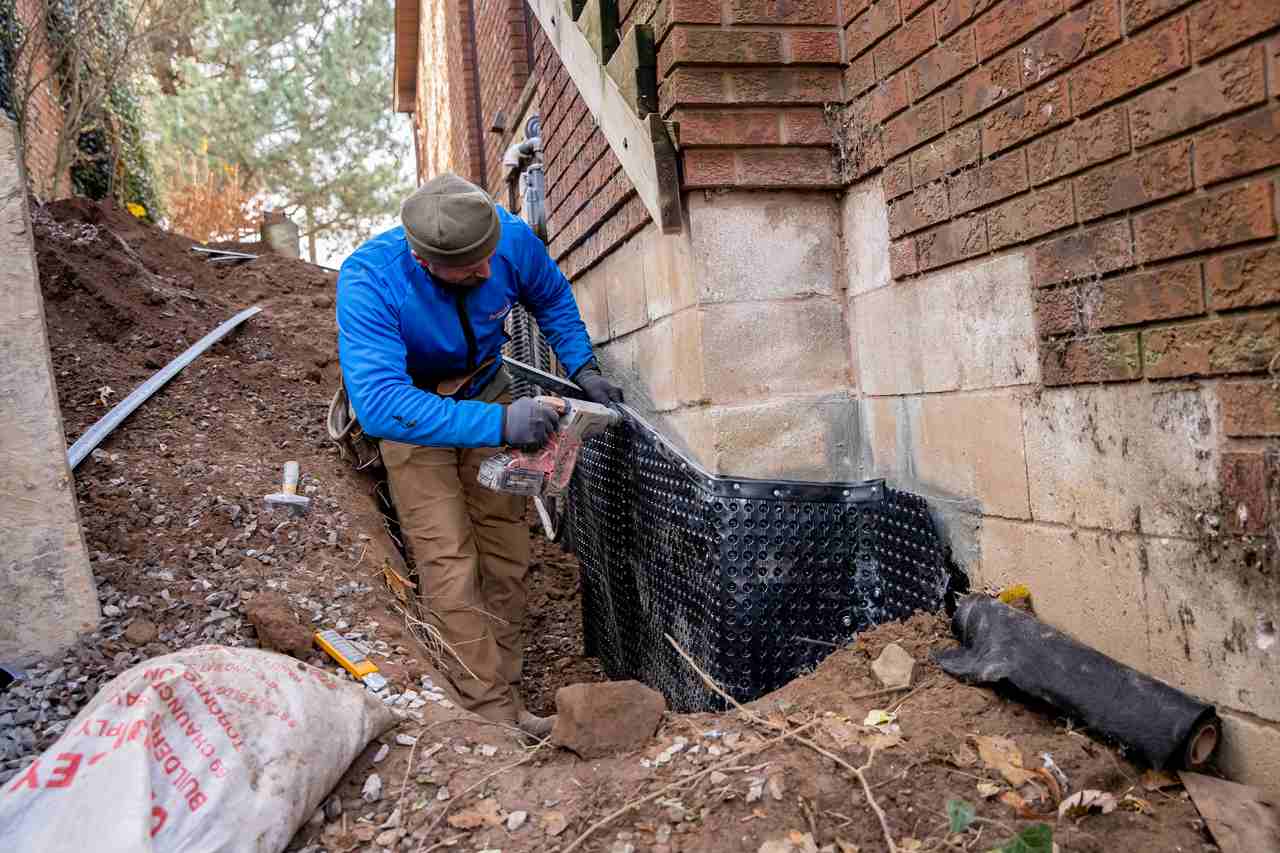
Exterior waterproofing means digging down to the footing. In summer, the soil is not frozen or saturated, so the crew can dig faster and cleaner. A dry trench also lets us see the wall clearly, find every crack and prepare the surface well.
Coatings and sealants cure faster
Warm weather helps materials dry. Coatings, membranes and sealants bond better to a dry wall, and they reach full strength sooner. As a result, the crew can backfill with confidence.
Longer days mean a steadier schedule
With more daylight, a crew can get through more of the work each day. Fewer frozen-ground delays also mean the job is less likely to stop and start.
You get ahead of the wet seasons
Fall rain and the spring thaw are when many basements start to leak. If you fix the problem in summer, the foundation is ready before the water comes back. See our guide to improving your home’s drainage for what else to check.
You can see the effect of humidity
Warm, humid air meets a cool basement wall, and condensation forms. A damp, musty basement in July tells you where the moisture is, and that makes the problem easier to diagnose. A fan only moves the damp air around, whereas waterproofing deals with the source.
Which jobs suit which season?
Not every job depends on the weather. The grid below shows how the common ones compare through the year.
Best Possible Not ideal
A general guide. We work year-round, and only pause outside in extreme cold, around -20°C.
What summer doesn’t fix
Summer isn’t a magic window. It is also a busy season, so the calendar fills up, and a heavy storm can still interrupt outdoor work. Ontario summers are not always dry, either. For that reason, it pays to book early, and to be flexible about the exact dates.
What about the other seasons?
Winter is a good time for interior work, and we work outside through the winter too, only pausing in extreme cold, around -20°C. See our guide to dealing with a wet basement in winter.
Spring is when problems show up, and wet soil makes outdoor work harder. It is a good time to book a summer slot.
Fall is nearly as good as summer for digging, and you finish before the freeze.
How far ahead should you book?
A technician usually visits within a day or two. After a visit, we usually schedule the job about 4 to 6 weeks after you accept the quote. So, if you want the work done in July, start in May. Use the planner below to see when to book for your month.
Tell us when you want the work done. Nothing is saved or sent anywhere.
A rough guide. Timing varies with the season and the size of the job.
What it costs
The season doesn’t change how we price the job. Interior waterproofing typically costs $69 to $190 per linear foot, and exterior waterproofing $110 to $500. A sump pump typically costs $550 to $3,650, and a battery backup $1,200 to $1,500. Only a free on-site estimate gives you a number for your house. See our cost guide.
What a full job includes
For a basement that needs the full treatment, we dig down to the footing, repair the wall and apply the membrane and the drainage layer. We then install new weeping tile, and backfill. For an interior system, we install a drain along the wall, a sump pit and a pump. Our guide to how a basement drainage system is installed walks through the steps.
How Aquatech helps
We start with a free on-site inspection, find where the water is coming from, and tell you honestly what the basement needs and when it can be done. Then you get a written, itemized estimate. A lifetime warranty backs every project and transfers to the next owner. Also, if you have a comparable written quote from a licensed Ontario contractor, we will match it.
FAQs about waterproofing in summer
Is summer the best time to waterproof a basement?
Can basement waterproofing be done in winter?
How long does waterproofing take?
Does summer waterproofing cost less?
Do I need waterproofing if my basement is dry in summer?
Why does my basement smell musty in summer?
Planning to waterproof your basement this summer?
Book a free assessment. We will look at the basement, tell you what it needs and when, and give you a written, itemized estimate.
