


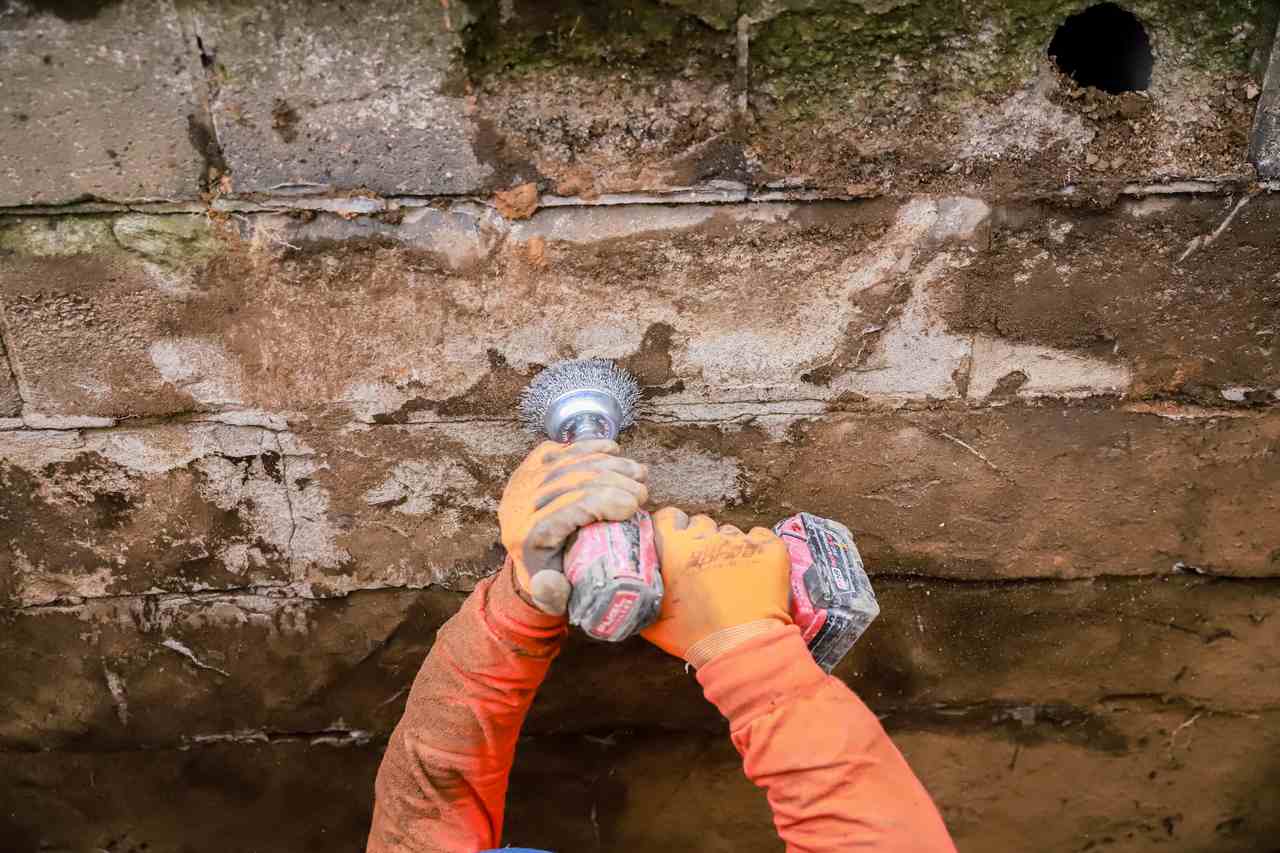

Efflorescence is the white, chalky or crystal-like deposit you see on basement walls and floors. It forms when water moves through concrete, block or brick, dissolves natural salts inside the material and leaves them on the surface as it evaporates. The deposit itself is harmless, but it is one of the clearest signs that water is getting into your foundation.
Aquatech Waterproofing has been fixing wet basements across Toronto and the GTA for more than 30 years. This guide explains how to recognize efflorescence, what its location on the wall tells you, how to clean it safely and how to stop it coming back.
Quick answer: Efflorescence is a white salt deposit left behind when water passes through concrete or masonry and evaporates. It is not dangerous and can usually be removed with a stiff dry brush, but it will keep coming back until the moisture source is fixed: a leaking crack, poor grading, missing exterior waterproofing or groundwater pressure. A quick test: spray it with water. Efflorescence dissolves; mould does not.
Key Takeaways
- Efflorescence means water is moving through the wall, even if the wall feels dry right now.
- Where it appears on the wall points to the cause: near the floor, along a crack, near the top or across the whole wall.
- Start with dry brushing; avoid soaking the wall with water, which can bring more salt to the surface.
- Sealers and paint over a wet wall often trap moisture and peel; fix the water first.
- On a new house, light efflorescence can fade as construction moisture dries out. If it keeps returning, there is an ongoing leak.
What Is Efflorescence and How Does It Form?
Efflorescence is a crystalline deposit of salts on the surface of concrete, block, brick, stucco or mortar. Cement-based materials naturally contain soluble salts, mostly calcium compounds. Three things must happen together for efflorescence to appear:
Remove any one of these, usually the water, and efflorescence stops forming.
The salt itself does not damage the wall, but the moisture behind it can lead to mould, peeling paint, rotting finishes and, in block or brick walls, gradual surface damage called spalling. That is why efflorescence is worth investigating, not just cleaning.
Is It Efflorescence or Mould?
White mould can look similar, but it needs a very different response. Here is how to tell them apart.
| Check | Efflorescence | Mould |
|---|---|---|
| Spray with water | Dissolves or disappears | Stays, may smear |
| Rub between fingers | Powdery or crystalline, crumbles | Soft, fuzzy or slimy |
| Where it grows | Concrete, block, brick, mortar | Wood, drywall, paper, carpet, dust on concrete |
| Colour | White to greyish | White, green, black, grey, often spotty |
| Smell | None | Musty |
| Health risk | None from the salt itself | Can affect breathing and allergies |
1. What happens when you spray it with water?
2. How does it feel?
3. What is it growing on?
4. Is there a musty smell?
What Does the Location on the Wall Tell You?
Efflorescence shows exactly where water is coming through. Tap where you see it on your wall.

What Causes Efflorescence in a Basement?
Groundwater and rain
Water from saturated soil, a high water table or heavy rain seeps into the foundation, especially when drainage is poor. See the causes of basement moisture.
Poor grading and gutters
Soil sloping toward the house and short downspouts send roof water straight to the foundation.
Missing or failed waterproofing
Many older homes have only a thin damp-proof coating, or none at all. See our waterproofing services.
Cracks and joints
Cracks, tie holes and cold joints let water in at specific points, leaving lines of salt. Learn how to find water entry points.
Construction moisture
New concrete and mortar hold a lot of water. Light efflorescence in the first year or two can be normal.
Condensation
Humid indoor air condensing on cool walls can add moisture, but it rarely causes heavy deposits on its own.
How to Remove Efflorescence
Start with the gentlest method and move up only if needed. Always test a small, hidden area first.
Dry brushing
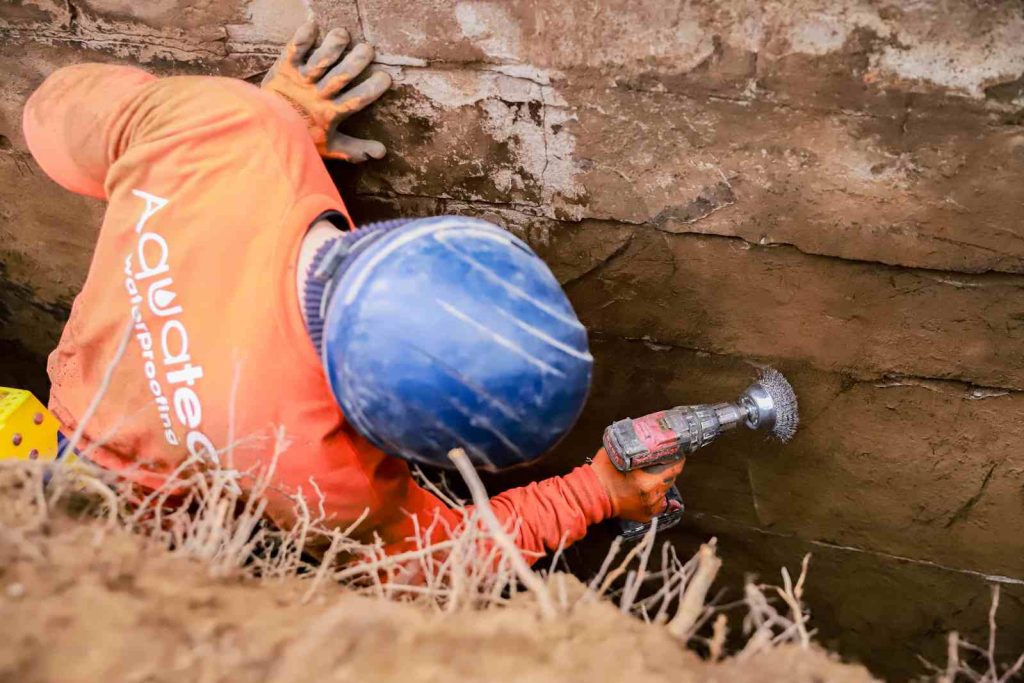
Brush the deposit off with a stiff nylon or wire brush while the wall is dry, and vacuum the dust. This removes most fresh efflorescence and adds no new water to the wall.
Light rinse or diluted vinegar
For what remains, wipe with clean water or a mild solution of white vinegar and water, scrub gently and rinse. Use as little water as possible and dry the area well with ventilation or a dehumidifier.
Commercial efflorescence cleaner
Masonry supply stores sell cleaners made to dissolve salt deposits. Follow the label exactly, pre-wet the wall if instructed, and wear gloves and eye protection.
Diluted acid (last resort)
Heavy, hardened deposits may need a diluted acid cleaner. Acid can etch and discolour concrete and mortar, so use only a product made for masonry, follow its dilution, always add acid to water, ventilate well and rinse thoroughly. Many homeowners leave this step to a professional.
White stains keep coming back?
That means water is still getting in. We find the source and fix it for good. The inspection is free.
Book a free inspectionCall 647-794-1701How to Stop Efflorescence Permanently
Cleaning removes the salt; only stopping the water stops new deposits. From the simplest to the most complete fix:
| Fix | What it solves | Effort |
|---|---|---|
| Downspout extensions and gutter cleaning | Roof water soaking the soil next to the wall | Low, DIY |
| Regrading | Ground that slopes toward the house | Low to medium |
| Crack injection | Water coming through individual cracks | Medium, done from inside |
| French drain | Water flowing toward the house across the yard | Medium |
| Interior waterproofing | Water at the wall-floor joint, groundwater pressure | High |
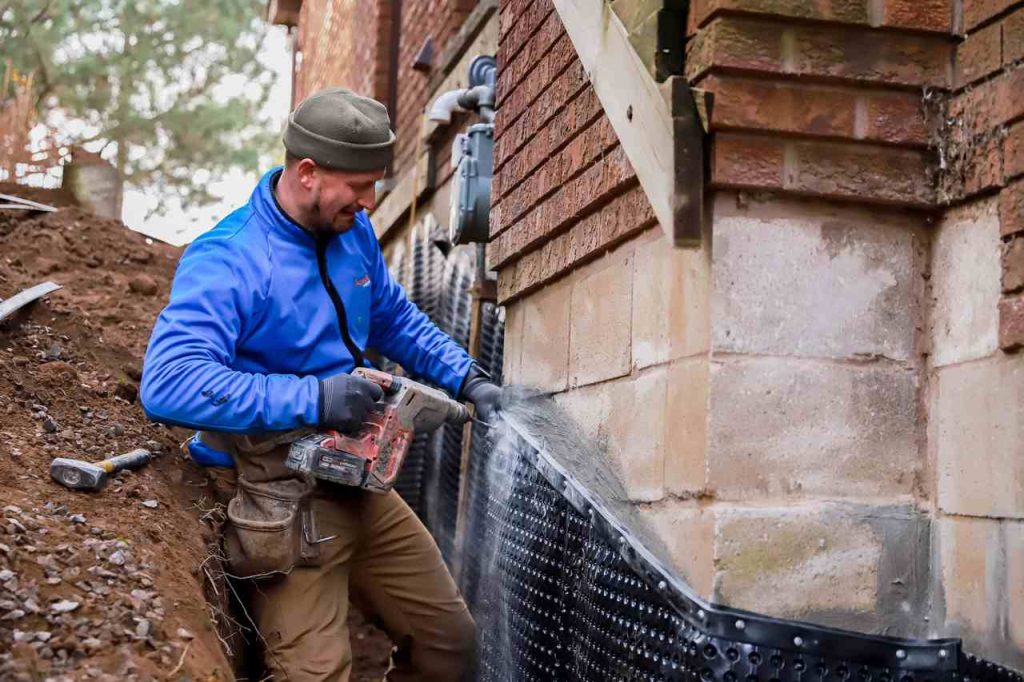
| Exterior waterproofing | Moisture through the whole wall; stops water before it enters | High |
How Much Does It Cost to Fix Efflorescence?
Cleaning efflorescence yourself costs little: a stiff brush, vinegar or a masonry cleaner. The real cost depends on the moisture source. Sealing one leaking crack is a small, quick repair; a basement with water at the wall-floor joint or across every wall needs a drainage and waterproofing system. For typical ranges, see how much basement waterproofing costs or try our waterproofing cost calculator.
Why Choose Aquatech Waterproofing?
We fix the cause
Brushing off salt is easy; we find where the water comes from and stop it.
Root-cause repair30+ years in the GTA
Aquatech Waterproofing has worked on thousands of Toronto basements, from small crack repairs to full systems.
Local experienceEvery solution in-house
Crack injection, interior and exterior waterproofing, drainage and sump pumps from one team.
One contractorFree inspection
An honest assessment of whether you need a small repair or a full system.
No obligationFinal Thoughts
Efflorescence is harmless in itself but it is a reliable early warning: water is moving through your foundation. Brush it off, note where it appears, and deal with the source while the repair is still simple. If it keeps coming back or you also see damp spots, peeling paint or a musty smell, have the basement inspected before the problem grows.
