



Plenty of homeowners can deal with part of a wet basement themselves. A few can deal with all of it. Many more spend a weekend and a couple of hundred dollars on a tub of sealant, then watch the same damp patch come back by spring.
So, can you waterproof your basement on your own? It depends on one thing: where the water comes from. If it is condensation, a blocked gutter or a short downspout, you can usually fix it with a ladder and an afternoon. If it is coming through a wall, up through the floor or out of a crack, a tube of sealant will not hold it for long.
The short answer: yes to the small, preventive jobs. No to anything where water is actively coming in, or where the foundation is cracked.
Take the 60-second quiz
Five questions about what you are seeing. The quiz tells you whether DIY is a reasonable start, whether to think twice, or whether it is time to call someone.
Should you DIY it? A 60-second quiz
Pick the answer that fits your basement best. Your result appears when you have answered all five.
A general guide, not a diagnosis. Nothing you select is saved or sent anywhere.
What you can do yourself, and what to leave
The quiz gives you a quick steer. The guide below sorts the usual jobs into three groups. The green ones are safe and cheap, the orange ones are easy to get wrong, and the last group needs a crew.
A general guide, not a diagnosis. A free assessment tells you what your basement needs.
Step zero: work out where the water comes from
Before you buy anything, find the source. Most failed DIY fixes fail because they treat the wrong problem. Start with our 15-minute basement walkthrough. Then, if one patch of wall worries you, try this.
It is a rough test, not a diagnosis. Still, it tells you whether you are dealing with seepage or with humidity, and those two need very different fixes.
DIY jobs that actually help
- Extend your downspouts. A downspout that empties beside the wall puts all of the roof’s rain next to your foundation. Extensions that carry it a couple of metres away cost little, and they often make the biggest difference.
- Clear gutters and window wells. A blocked gutter overflows right at the wall, and a blocked well sends rain straight to the window.
- Test the sump pump. Tip a bucket of water into the pit, and keep your hands out of it. The pump should start, empty the pit and switch off. If it doesn’t, here is what a new pump involves.
- Run a dehumidifier. It helps with condensation and humidity, although it can’t stop water coming through a wall.
- Look at the grading. The soil next to the house should slope away from it. Look first, and dig later, if at all.
- Move things off the floor. If water does get in, you will lose less.
A year of basement checks
A few minutes each season catches most problems early.
Why sealants and paints disappoint
Waterproof paint and sealant do have a place. They can help with condensation, and with light dampness on a wall that is otherwise dry. The trouble starts when water is pushing through the concrete. A coating can only hold what the wall lets it, so a wall under pressure tends to push it off, often as bubbling or flaking paint within a season.
You seal the damp patch you can see. The water is still pressing on the wall, so it finds another way in a little further along, or through the floor. It looks like a new leak, but it is the same one. That is how a quick fix turns one problem into two.
Our guide to quick fixes that make basement leaks worse goes into this in more detail.
Jobs to think twice about
Filling cracks. A dry hairline crack that isn’t growing is usually cosmetic. A crack that is wide, horizontal or damp is not. Here is how to tell the difference.
Changing the grading. Sloping soil away from the house helps, but done badly it can send more water toward the wall than before.
Replacing a sump pump. It is a common DIY job, but it involves electricity and plumbing, and the discharge line has to be right. Check what your municipality requires, and if you are unsure, hire it out.
Four DIY myths
When to call a pro
- Water is coming through a wall or the floor, especially after heavy rain.
- A crack is wide, horizontal, stair-stepped or wet.
- Dampness keeps returning after you have dried it out.
- Mould is spreading. Why mould and waterproofing go together.
- The sump pump won’t start, or runs without stopping.
- The fix means digging next to the foundation.
A note on digging
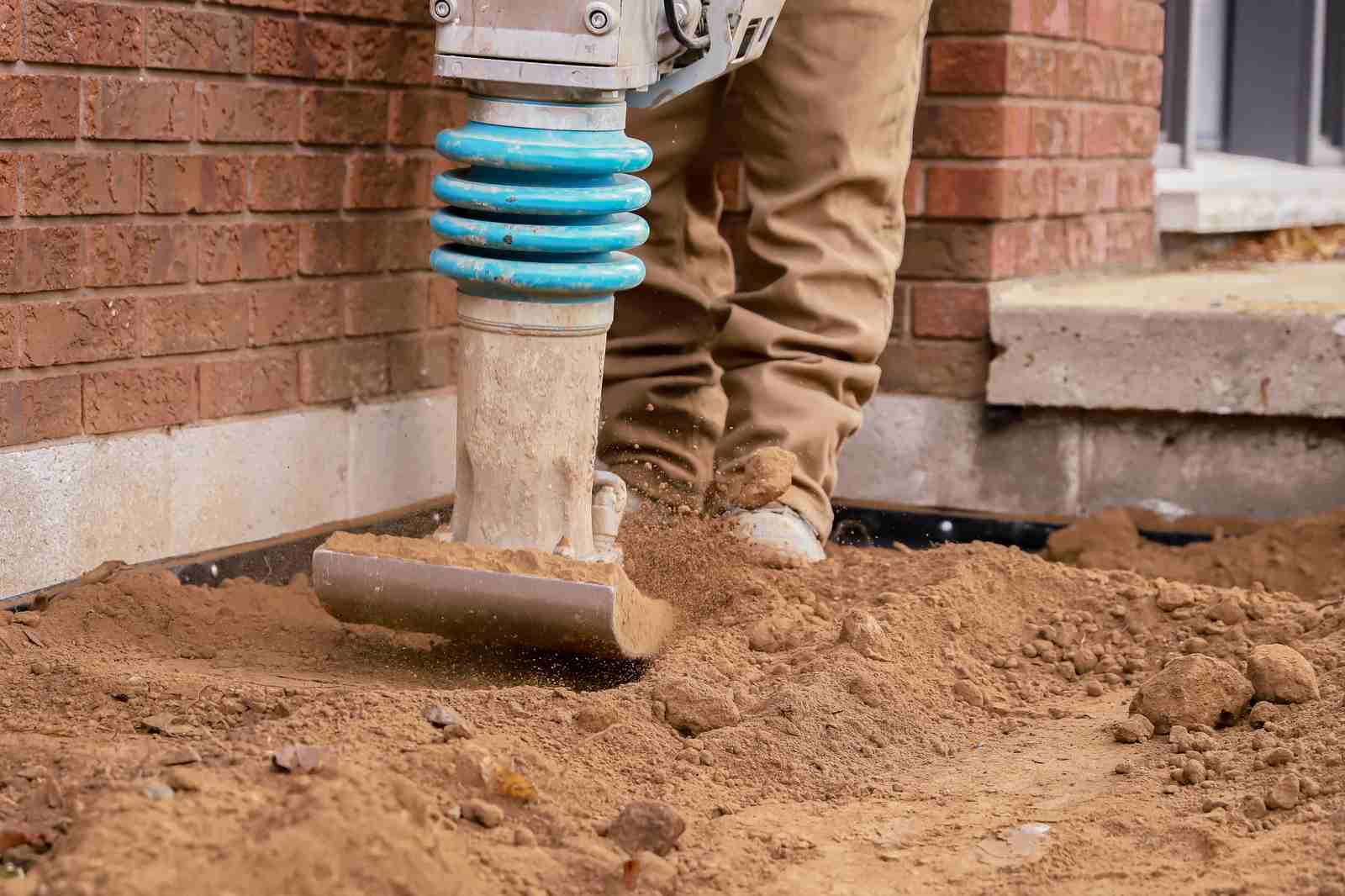
Excavating against a foundation is where DIY gets risky. You can hit gas, water or electrical lines, and a deep trench next to a wall can weaken it. In Ontario you must have underground utilities located before you dig, through Ontario One Call. If the job needs more than a shallow trench, it is a job for a crew with the right equipment.
What a proper fix costs
Interior waterproofing typically costs $69 to $195 per linear foot, and exterior waterproofing $100 to $290. Foundation crack repair typically costs $1,500 to $3,000. Only a free on-site estimate gives you a number for your house. See our basement waterproofing cost guide.
A DIY fix that fails means paying twice: once for the materials, and again for the repair that should have come first. That is the real cost to weigh against a professional quote.
How Aquatech helps
We are happy to see homeowners take care of the small jobs. For anything beyond that, we start with a free on-site inspection, find where the water is coming from, and give you a written, itemized estimate. Every project is backed by a lifetime warranty that transfers to the next owner, and if you have a comparable written quote from a licensed Ontario contractor, we will match it. Our guide to what a waterproofing quote should include shows how to compare quotes.
